The Difference Between NFC and RFID: What You Need to Know
16/02/2026
16/02/2026

Contactless technologies have become a foundation of modern digital infrastructure. They are widely used in logistics, industry, retail, and everyday life. The most common solutions are RFID and NFC. Although both rely on radio-frequency communication, their capabilities, operating range, and practical applications differ significantly.
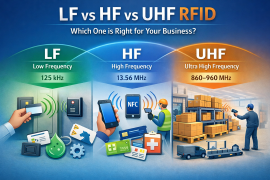
RFID (Radio Frequency Identification) is a method of wireless identification that allows data to be read from tags without physical contact. Each tag contains a microchip and an antenna that transmit stored information to a reader.
This technology is actively used in:
RFID is optimal for large-scale operations where fast scanning of numerous objects is required.
NFC (Near Field Communication) is a short-range communication technology developed from high-frequency RFID standards. It is designed for data exchange over very short distances — typically just a few centimeters.
NFC is integrated into most modern smartphones and mobile devices, making it highly accessible for everyday use.
Main NFC use cases include:
RFID systems can operate from a few centimeters up to several tens of meters. NFC is limited to close proximity, typically no more than 10–20 centimeters.
RFID can store and transmit larger amounts of data, which is important in logistics and industrial environments. NFC is designed for exchanging smaller data sets such as identifiers, URLs, and contact details.
RFID is primarily used in corporate and industrial environments. NFC focuses on consumer interaction and mobile device integration.
The short operational range of NFC reduces the risk of unauthorized access during payments or authentication. RFID systems are optimized for efficiency and scalability, particularly in large warehouse or production spaces.
The choice depends on several factors:
If the goal is to track products across large facilities or manage warehouse inventory, RFID is the appropriate solution. If the task involves mobile payments, access control, or quick data exchange, NFC is more suitable.
Both technologies play an essential role in contactless identification systems. Understanding their differences enables businesses and individuals to implement the most effective solution for their specific needs.