+40 774 906 374


The maximum quantity of this product has been added to the cart.

Sort
Show on page
0.75 EUR - 1.2 EUR
The price changes based on the quantity you choose

0.52 EUR - 0.84 EUR
The price changes based on the quantity you choose
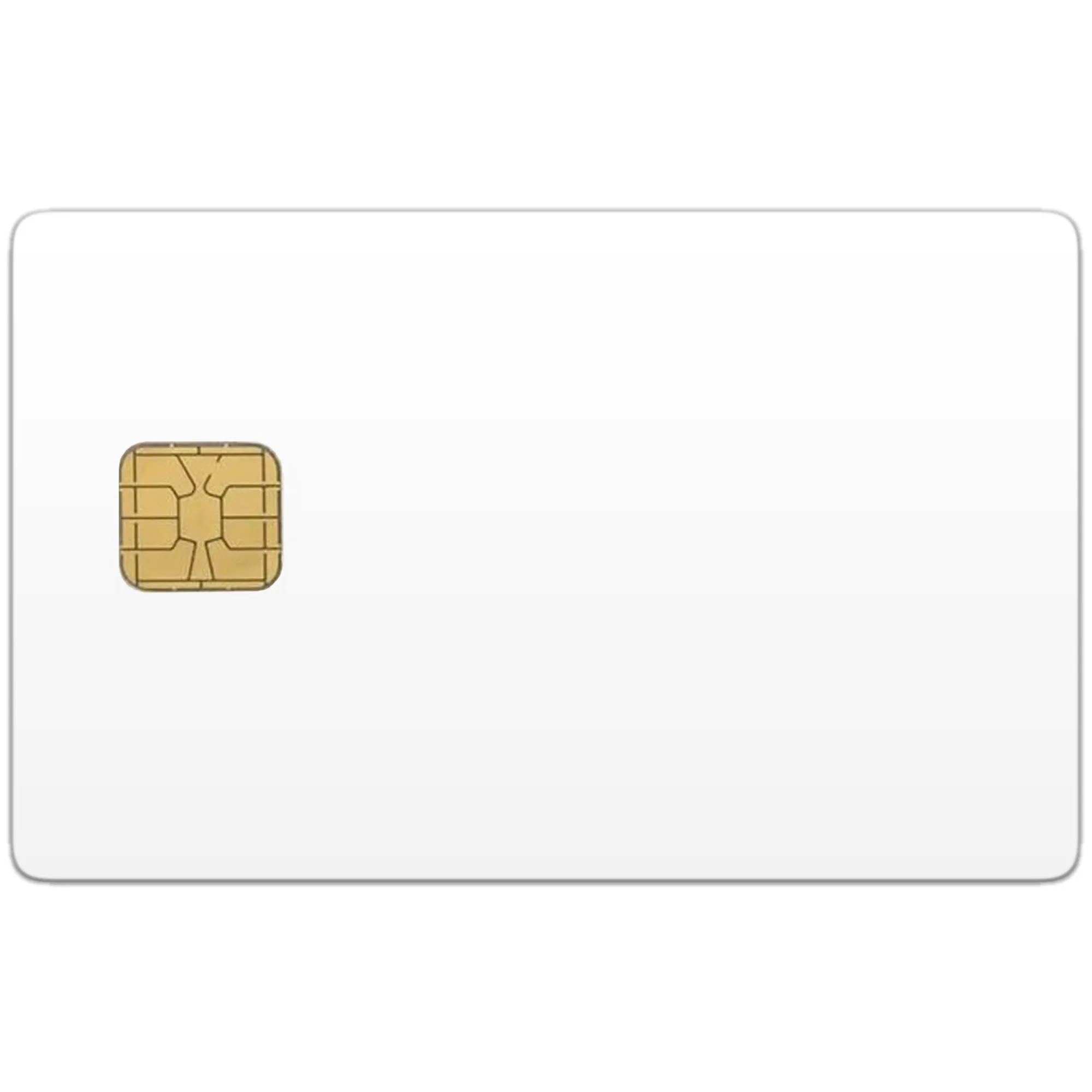
Contact smart cards are plastic cards equipped with a memory or microprocessor chip featuring a visible contact area. Unlike contactless cards, these smart cards exchange data and receive power through direct physical contact with a card reader. The dimensions and chip position are defined by ISO 7810 and ISO 7816 standards.
Contact chip cards are widely used in secure identification, authentication systems, banking, telecommunications, and corporate access control environments.
Memory smart cards store data without an embedded processor. They are commonly used for hardware access restriction, prepaid systems, student IDs, fuel station cards, and basic access control applications.
Microprocessor smart cards contain a CPU and secure data management unit. These cards support encrypted authentication and are frequently used for digital signatures, secure login credentials, enterprise software access (CRM, ERP systems), and government ID solutions.
Cryptographic cards include built-in encryption algorithms for high-level data protection. They are used in SIM cards for mobile operators, banking cards, PKI infrastructure, and secure financial transactions.
Contact smart cards can be combined with contactless RFID or NFC technology in a hybrid format. For example, a card may integrate SLE4428 + MIFARE 1K or include a magnetic stripe. Hybrid smart cards provide multi-technology compatibility for complex security systems.
When printing on contact chip cards using thermal or retransfer printers, it is important to consider surface structure. The chip module is embedded at high temperatures, which may slightly affect the evenness of the PVC layer beneath the contact area. Professional card manufacturing ensures optimal surface quality for personalization and printing.
Contact smart cards remain a reliable solution for secure data storage, authentication, and controlled access. Their compliance with ISO standards and strong encryption capabilities make them essential for modern security infrastructure.
